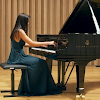
“Why do you like Kapustin so much?”
By now you'll know a fair amount about my journey, both musically and personally. But there is a part of the story I haven't yet shared. It takes time and reflection before you are able to find the correct vocabulary and figure out why it's important to share in the first place. On my Master’s programme we are always encouraged to ask ourselves why we play. So, I suppose this is my ‘why’. And I’ve come to understand that I’d actually be doing the music a disservice by not explaining why it matters.
Having grown up with alcoholism in my family, it was inevitable that I'd unconsciously continue to replicate this dynamic in my adult relationships. Instead of alcohol, it was cannabis. There's a particular type of love that women give to their addicted partners. It's all-consuming, unconditional, and you'll lose yourself entirely just to ensure the relationship stays alive. Any negative behaviour or substance abuse is excused so long as you have a roof over your head and you learn to keep your mouth shut. So long as they are happy…
After having lived in what you might call an emotionally depleted environment, and experiencing the grief of having lost a parent, I became susceptible to anyone of a predatory nature and I was groomed by a colleague - a fellow musician. Once this was discovered, I was punished for having lost my personal boundaries and experienced a period of psychological and emotional post-separation abuse. I was caught in a battlefield, or a ‘perfect storm’ so it's called.
After falling into a mental health crisis and seeking professional help, I sat at the piano the day after starting therapy and said to myself ‘the music will save you Ophelia’. Why did I say that? What exactly about the music was supposed to ‘save’ me?
The real gold here is this - No one can get you when you are with your instrument. You become completely untouchable. The composer can't gaslight you, humiliate you, manipulate you or abuse you. It is an absolute truth. On the score the notes are true, the piano is always a piano, and there's no ambivalence. That's the true power of music. Not that it ‘relaxes’ us, ‘regulates’ us, ‘moves’ us...but by simply creating, you reclaim your autonomy, your self of sense and your true agency. It is something you can control. Because that's where you exist. In between the notes on the page. It helps you return back to your body during experiences that leave you in a sustained state of trauma.
So when I say that music saved me, I mean, not that the music was so wonderful that it made me feel physically better (which it absolutely did), but by having access to an instrument, I was able to rescue myself. I was able to gain control when my life felt out of control. Kapustin’s music has specific qualities that are perfect for exactly this. He literally uses a genre that is about all freedom and gives it structure, the chaos living inside the template. It acted as a direct mirror. And did you know, rhythmic entrainment (like the type found in Kapustin's relentless passages) helps the body to engage the parasympathetic nervous system (the 'rest and digest' response) and quiet the sympathetic system (the part that tells you to fight, flight, freeze or fawn)...possible PhD pending on this by the way!
Music is never really about music. It’s about life. And music just becomes the way in which we can say the things that are otherwise too hard to say out loud. Musicians have a very specific tool that one day might help them find the only way out and the only way back to themselves. People always ask me, ‘Why do you like Kapustin so much?’ - maybe one day I’ll actually tell them the truth.